
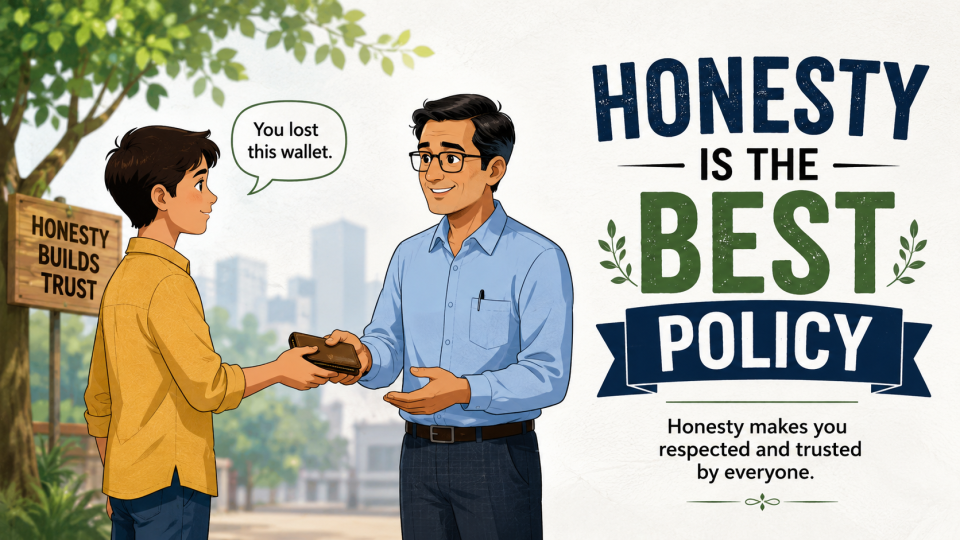
The proverb “Honesty is the Best Policy” has guided people for generations because it teaches a lesson that never goes out of date. The honesty is the best policy story reminds you that telling the truth and acting with integrity are more valuable than gaining something through dishonesty. Whether you are a student, a parent, or a professional, honesty helps you build trust, earn respect, and strengthen relationships. Through simple yet meaningful stories, you can understand why truthful actions often lead to lasting rewards. This timeless moral continues to inspire people to choose honesty over greed, fear, and temptation.
Honesty is the Best Policy Story in 100 Words
A poor woodcutter lived near a forest and earned his living by cutting trees. One day, while working beside a river, his iron axe slipped from his hands and fell into the water. As he cried in despair, a divine being appeared and showed him a golden axe, asking if it was his. The woodcutter honestly replied that it was not. The same happened with a silver axe. Finally, the iron axe was brought out, and the woodcutter happily claimed it. Impressed by his truthfulness, the divine being rewarded him with all three axes.
Moral: Honesty always brings respect and rewards.
Honesty is the Best Policy Story in 200 Words
One afternoon, while cutting a tree near a river, his axe accidentally slipped into the water. Since the river was deep, he could not retrieve it. Feeling helpless, he sat on the riverbank.
A divine figure appeared before him and offered to help. To test the woodcutter’s character, the figure first brought out a golden axe and asked whether it belonged to him. The woodcutter politely refused because it was not his. Next came a silver axe, but he again answered honestly.
Finally, the divine figure returned with the old iron axe. The woodcutter immediately recognized it and thanked the figure for finding it.
Pleased with his honesty, the divine figure rewarded him with the golden and silver axes in addition to his own. The woodcutter returned home happily and continued living with the same honesty and humility.
Moral: Truthfulness and integrity are always rewarded, even if the reward does not come immediately.
Honesty is the Best Policy Story in 300 Words
Long ago, a poor woodcutter lived near a dense forest. Every morning, he carried his old iron axe into the woods to cut firewood. Selling wood in the nearby village was the only way he could earn money for his family. Although he worked hard, he always remained honest and never wished to gain wealth unfairly.
One day, while cutting a tree beside a flowing river, the woodcutter accidentally dropped his axe into the water. He searched for it but could not find it because the river was too deep. Without his axe, he had no way to continue his work.
Hearing his cries, a divine being appeared and offered help. To test the woodcutter’s honesty, the figure first brought out a beautiful golden axe. The woodcutter looked at it carefully and replied, “No, this is not mine.”
The figure then returned with a shining silver axe, but the woodcutter again answered truthfully that it did not belong to him.
Finally, the divine being emerged holding the old iron axe. The woodcutter smiled with relief and gratefully claimed it as his own.
Impressed by such honesty, the divine being rewarded him with all three axes. The woodcutter accepted the gift with gratitude and continued to live honestly throughout his life.
This story teaches that honesty in daily life builds trust and respect, while greed often leads to disappointment. Good character is more valuable than wealth because it earns admiration that lasts a lifetime.
Moral: Honesty is the foundation of a respected and meaningful life.
Honesty is the Best Policy Story in 450 Words
Once upon a time, a poor woodcutter lived in a small village surrounded by forests. He had very little money, but he was hardworking and honest. Every day before sunrise, he carried his old iron axe into the forest, cut firewood, and sold it in the nearby market. The income was modest, yet it was enough to support his family with dignity.
One afternoon, while cutting a tree beside a river, the unexpected happened. His axe slipped from his hands and fell into the deep water. The woodcutter searched for it, but the current was too strong, and he could not recover it. Losing the axe meant losing his only source of income. Feeling helpless, he sat by the river and prayed for help.
A divine being appeared after hearing his cries. Smiling kindly, the figure offered assistance and disappeared beneath the water. Moments later, the figure returned carrying a magnificent golden axe.
“Is this your axe?” the figure asked.
The woodcutter examined it carefully before replying, “No, that is not mine.”
The figure disappeared again and returned with a beautiful silver axe. Once more, the woodcutter answered honestly that it did not belong to him.
Finally, the divine being came back holding the old iron axe. The woodcutter’s face lit up with happiness.
“Yes, this is my axe,” he said gratefully.
The divine being admired his honesty. Even though the woodcutter had the opportunity to claim expensive axes and become wealthy, he chose the truth instead. As a reward for his truthfulness and good character, the figure gifted him all three axes.
The woodcutter returned home filled with gratitude. His story soon spread across nearby villages, inspiring others to value honesty above wealth. People respected him not because he received gold and silver, but because he remained truthful even when nobody could have questioned him.
The lesson from this honesty is the best policy story applies in every stage of life. Whether you are studying, working, running a business, or building friendships, honesty helps you earn trust and respect that money cannot buy. Temporary gains achieved through dishonesty rarely last, but a reputation built on integrity stays with you forever.
Moral: Honesty is not just a good habit—it is the foundation of strong character, lasting relationships, and lifelong respect.
Conclusion
The honesty is the best policy story continues to inspire readers because its lesson is simple, practical, and relevant in every stage of life. Whether you read the story in 100 words or a more detailed version, the message remains the same: honesty is a quality that earns trust, strengthens relationships, and shapes good character. While dishonesty may offer temporary benefits, they rarely last. Truthfulness, on the other hand, builds a reputation that people respect for years. By choosing honesty in your daily actions—at home, in school, at work, and in your relationships—you create a life based on integrity, responsibility, and self-respect. In the end, honesty is not just the best policy; it is the foundation of a meaningful and successful life.
Frequently Asked Questions (FAQs)
Q1. What is the moral of the story “Honesty Is the Best Policy”?
The moral is that being truthful and acting with integrity always earns trust, respect, and lasting rewards. Honesty may not bring instant success, but it helps build strong character.
Q2. Why is the woodcutter rewarded in the story?
The woodcutter is rewarded because he refuses to claim the golden and silver axes that do not belong to him. His honesty proves that he values truth over personal gain.
Q3. Why is honesty important in everyday life?
Honesty helps you build meaningful relationships, gain people’s trust, and maintain a good reputation. It also gives you peace of mind because you never have to hide the truth.
Q4. Is “Honesty Is the Best Policy” a true story?
No, it is a traditional moral story used to teach the value of honesty and integrity. While the events are fictional, the lesson is relevant to real-life situations.
Q5. How can children practice honesty in daily life?
Children can practice honesty by telling the truth, admitting mistakes, returning lost items, completing schoolwork on their own, and keeping their promises to others.
